1. Global Commercial & Industrial Landscape of 1200℃ High Temperature Resistance Wire
In the modern thermal engineering ecosystem, 1200℃ high temperature resistance wire serves as the primary electrothermal energy converter across heavy metallurgy, semiconductor thermal processing, advanced glass manufacturing, clean energy kilns, and high-efficiency heat treatment facilities worldwide. Operating continuously at 1200°C represents a critical metallurgical threshold where standard resistance alloys experience rapid structural degradation, oxidation spallation, phase transformation, and creep sag unless precisely engineered at the atomic level.
Electrification & Decarbonization
Global net-zero mandates are accelerating the transition from fossil fuel burners to electric radiant heating systems. High-density resistance wire elements operating at 1200°C are replacing gas combustion loops in industrial heat processing, reducing direct carbon emissions by up to 100% when coupled with green power.
Semiconductor & Battery Kilns
The global expansion of semiconductor wafer diffusion furnaces and lithium-ion battery cathode sintering (LFP and NCM high-temperature rotary kilns) has dramatically inflated demand for low-contamination, highly stable 1200°C FeCrAl and NiCr heating elements with zero micro-particle shedding.
High-Temperature Oxidation Kinetics
At temperatures near 1200°C, alloy performance is governed by the formation speed, self-healing capability, and adhesion of a protective oxide scale. Iron-Chromium-Aluminium alloys form a dense, protective alpha-alumina ($\alpha\text{-}Al_2O_3$) barrier, whereas Nickel-Chromium alloys build a protective chromia ($Cr_2O_3$) scale backed by a nickel-chromite spinel structure.
2. Engineering Metallurgy, Chemical Composition & Technical Specifications
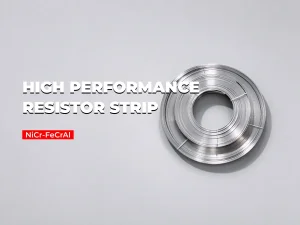
Designing 1200℃ high temperature resistance wire requires rigorous control over chemistry, melting technique, cold working, and bright annealing. Resistance alloys are broadly split into two premier metallurgical systems: Iron-Chromium-Aluminium (FeCrAl) and Nickel-Chromium (NiCr) alloys. Each system exhibits distinctive thermodynamic and electrical characteristics when subjected to extreme heat cycling.
| Alloy Grade | Alloy Family | Nominal Chemical Composition (%) | Max Temp (°C) | Resistivity @ 20°C (μΩ·m) | Density (g/cm³) | Primary Industrial Application |
|---|---|---|---|---|---|---|
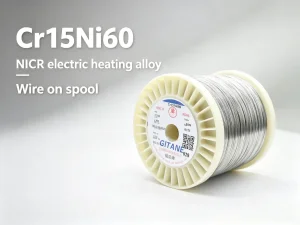
| Cr20Ni80 / Cr20Ni80S | NiCr System | Ni 78.0-80.0, Cr 20.0-23.0, Si 1.0-1.5, Fe ≤1.0 | 1200°C | 1.09 ± 0.05 | 8.40 | Industrial furnaces, radiant tubes, atmosphere heat treating |
| Cr30Ni70 | NiCr System | Ni 68.0-71.0, Cr 28.0-31.0, Si 0.8-1.5, Fe ≤1.0 | 1250°C | 1.18 ± 0.05 | 8.10 | Long-life cyclic industrial heaters, medical & vacuum kilns |
| 0Cr25Al5 | FeCrAl System | Cr 23.0-26.0, Al 4.5-5.5, Fe Balance, RE Trace | 1250°C | 1.42 ± 0.07 | 7.10 | Industrial electric furnaces, ceramic kilns, continuous heaters |
| 0Cr21Al6Nb | FeCrAl + RE | Cr 21.0-23.0, Al 5.5-6.5, Nb 0.5-0.8, Fe Balance | 1350°C | 1.45 ± 0.07 | 7.10 | High-temperature industrial kilns, sintering furnaces |
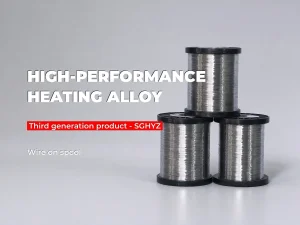
| SPARK SGHYZ | Advanced FeCrAl | Cr 24.0-26.0, Al 6.0-7.0, Y/Ce Micro-alloyed | 1400°C | 1.45 ± 0.08 | 7.10 | Powder metallurgy kilns, semiconductor wafer processing |
| SPARK SGHT | PM FeCrAl | Powder Metallurgy Micro-grained Fe-Cr-Al-RE | 1425°C | 1.48 ± 0.08 | 7.10 | Ultra-high-temp heavy duty industrial furnace elements |
Surface Load Engineering & Element Lifetime Optimization
The longevity of a 1200℃ resistance wire element is directly dependent on its surface load ($W$, expressed in $W/cm^2$). The surface load determines the thermal gradient between the internal wire core and its outer surface. Higher surface loads increase core temperatures, accelerating grain growth and oxide scale destruction.
W = P / (π · d · L)
Where P = Power Output (Watts), d = Wire Diameter (cm), and L = Active Heating Length (cm). For 1200°C continuous operation in air, recommended maximum surface loads for FeCrAl wire range from 1.5 to 2.5 W/cm², whereas NiCr wire operates optimally between 1.2 to 2.0 W/cm² depending on furnace atmosphere.
3. China Manufacturing Efficiency & Integrated Supply Chain Advantages
Why do international furnace OEMs, thermal system integrators, and industrial heating buyers source 1200℃ high temperature resistance wire from top-tier China manufacturers? The answer lies in China's unique convergence of upstream metallurgical integration, advanced rare-earth micro-alloying innovation, ultra-large-scale cold-drawing automation, and unbeatable supply chain responsiveness.
Vacuum Induction Melting (VIM) + ESR
Leading Chinese plants utilize double-vacuum melting processes (VIM + Electroslag Remelting). This drastically reduces residual impurities such as Sulfur (S < 0.003%), Carbon (C < 0.02%), and Phosphorous, preventing premature intergranular embrittlement during prolonged exposure at 1200°C.
Unrivaled Cost-to-Performance Ratio
With direct access to domestic high-purity electrolytic nickel, chromium, and rare-earth elements (Yttrium, Cerium, Lanthanum), Chinese manufacturers provide premium-grade 1200°C resistance wires at a 30% to 45% cost savings compared to traditional European or American suppliers, without sacrificing grain stability or service life.
High-Capacity Precision Wire Drawing
State-of-the-art multi-pass diamond die drawing machines deliver ultra-precise dimensional tolerances (down to ±0.005mm) across wire diameters from 0.05mm fine wire to 12.0mm heavy rod, ensuring uniform electrical resistance per meter across tens of thousands of continuous meters.
4. Localized Industrial Application Scenarios & Operational Case Studies
Different industrial applications place unique mechanical, atmospheric, and chemical demands on 1200℃ resistance heating elements. Selecting between NiCr and FeCrAl alloys requires understanding the localized environment inside the furnace chamber.
A. Industrial Ceramic Sintering & Shuttle Kilns
In ceramic sintering kilns operating at 1150°C - 1250°C, oxygen-rich firing conditions accelerate oxidation. FeCrAl 0Cr25Al5 and SGHYZ wires are specified because the formed $\alpha\text{-}Al_2O_3$ scale is virtually inert to ceramic vapors, preventing chemical corrosion and element hot-spots.
B. Steel Heat Treatment & Carburizing Furnaces
Controlled atmosphere furnaces (Endothermic gas, Carburizing, Nitriding) subject heating elements to potential carbon pickup and green rot. Cr20Ni80S and Cr30Ni70 wires exhibit superior resistance to carburization compared to standard FeCrAl, keeping elements ductile and avoiding premature brittle failure.
C. Semiconductor Wafer Annealing & Diffusion
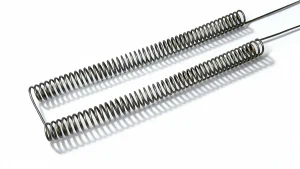
Semiconductor quartz tube furnaces demand high thermal uniformity and zero particulate flaking. High-purity Cr20Ni80 bright-annealed resistance wire coils provide steady electrical resistivity and clean heating without shedding microscopic oxide dust into ultra-clean chambers.
D. Glass Bending, Tempering & Fiber Production
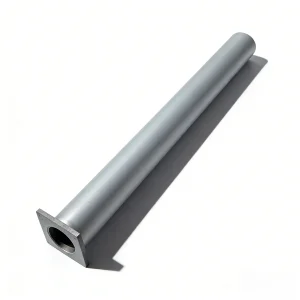
Continuous glass tempering furnaces require rapid thermal response and resistance to mechanical vibration during heating cycles. Heavy gauge 0Cr21Al6Nb coiled elements mounted on ceramic tubes provide high mechanical rigidity and zero room-temperature fragility during furnace downtime.
5. Global Procurement Framework & Quality Assurance Checklist
When global EPC contractors, procurement specialists, and furnace manufacturers source China 1200℃ high temperature resistance wire, evaluating technical parameters beyond simple chemical composition is essential for long-term operational success.
Key Procurement Evaluation Metrics
- Accelerated Oxidation Life (Bash & Harsch Test): Verify that NiCr wire meets ASTM B78 standards and FeCrAl wire conforms to GB/T 1234-2012 / DIN 17470 test protocols.
- Electrical Resistance Tolerance: Ensure strict resistivity variation within ±3% to ±5% along the entire spool to prevent uneven hot spots.
- Surface Quality & Brightness: Wire surface must be clean, free of deep draw scratches, carbon residues, or oxide scale patches prior to installation.
- Elongation & Tensile Strength: Proper soft-annealing ensures high elongation (>15-20%), allowing smooth spiral coiling without micro-cracking.
Export Packaging & Compliance Logistics
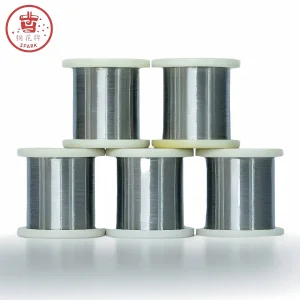
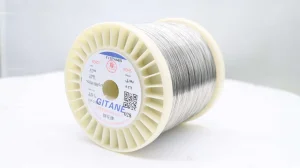
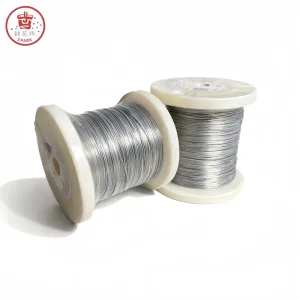
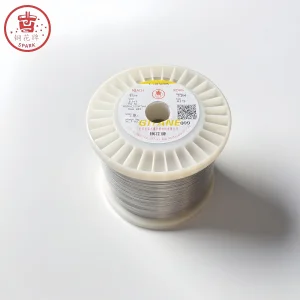
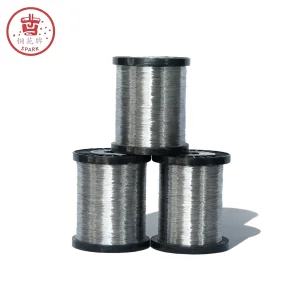
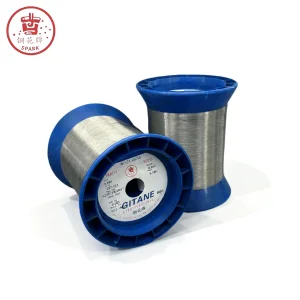
- Spooling & Coiling: DIN160, DIN200, DIN250 plastic spools or heavy wooden reels for large gauge wire, precision-wound under constant tension.
- Moisture-Proof Vacuum Sealing: Sealed inside heavy polyethylene foil with desiccant bags to prevent surface oxidation during ocean freight.
- Mill Test Certificates (MTC EN 10204 3.1): Full heat-traceability documentation containing actual chemical analysis, room-temperature resistivity, and tensile data.
- ISO 9001 & RoHS Compliance: Verified environmental safety and strict quality management compliance.
6. Technological Trends & Future Development Outlook
As industrial processes push operating temperatures higher while demanding greater energy efficiency and longer component lifetimes, the high-temperature resistance alloy sector is undergoing significant technological evolution.
Powder Metallurgy (PM) Alloys
Traditional ingot-melting methods suffer from grain coarsening above 1200°C. Advanced Powder Metallurgy FeCrAl alloys (such as SPARK SGHT) utilize gas atomization and hot isostatic pressing (HIP) to create an ultra-fine grain matrix, increasing creep strength by 300% and extending 1400°C service life significantly.
Oxide Dispersion Strengthened (ODS)
Incorporating nanometer-scale yttrium oxide ($Y_2O_3$) particles directly into the alloy matrix prevents dislocation movement at temperatures up to 1350°C–1400°C. ODS technology eliminates traditional high-temperature element sag, enabling vertical element hanging without heavy structural ceramic supports.
Smart Heating Elements with Integrated Sensing
Next-generation industrial electric furnaces are pairing resistance wire elements with real-time resistance monitoring. Because wire resistance changes predictably as the oxide scale consumes chromium/aluminium, intelligent controllers can predict remaining element life and schedule preventative maintenance before element failure occurs.
7. Frequently Asked Questions (FAQ) - Technical & Sourcing Intelligence
In-depth answers to critical metallurgical, engineering, and supply questions asked by thermal engineers and global buyers.
Q1: What is the main operational difference between NiCr and FeCrAl resistance wires at 1200℃?
At 1200°C, FeCrAl alloys (such as 0Cr25Al5, SGHYZ) form a protective alpha-alumina ($Al_2O_3$) scale, which offers a higher maximum operating temperature (up to 1425°C), higher electrical resistivity (~1.45 μΩ·m), lower density (~7.10 g/cm³), and longer oxidation life compared to NiCr. However, FeCrAl becomes brittle after high-temperature exposure and has lower hot creep strength. NiCr alloys (such as Cr20Ni80) form a chromia ($Cr_2O_3$) scale, maintaining superior ductility, hot strength, and mechanical robustness after cooling down, making them easier to repair and ideal for applications subject to heavy mechanical vibration or frequent on/off cycling.
Q2: Why does FeCrAl wire have a lower weight per meter than NiCr wire of the same diameter?
FeCrAl alloys have a density of approximately 7.10 g/cm³, whereas Nickel-Chromium alloys have a density of 8.40 g/cm³. This represents a ~15% weight reduction for FeCrAl wire of identical diameter. Combined with FeCrAl's significantly higher electrical resistivity (which allows for smaller wire cross-sections or shorter lengths for the same electrical resistance), using FeCrAl provides substantial raw material cost savings per furnace element build.
Q3: How does atmosphere composition affect 1200℃ high temperature resistance wire selection?
Furnace atmosphere heavily dictates alloy life:
• Oxidizing (Air): Excellent for both FeCrAl and NiCr alloys.
• Carburizing Atmosphere: NiCr (Cr20Ni80S) is superior; FeCrAl absorbs carbon, forming brittle aluminium/chromium carbides that destroy the protective scale.
• Nitrogen / Ammonia Atmosphere: NiCr performs well up to 1050°C; FeCrAl forms nitrides above 1000°C unless a pre-oxidized alumina scale is maintained.
• Vacuum: NiCr is limited because chromium volatilizes at high temperature under hard vacuum; specialized low-vapor-pressure FeCrAl or refractory metals are preferred.
Q4: What causes 1200℃ resistance heating elements to sag, and how can it be prevented?
Element sag is caused by thermal creep under the wire's own weight at elevated temperatures, exacerbated by grain growth. To prevent sag:
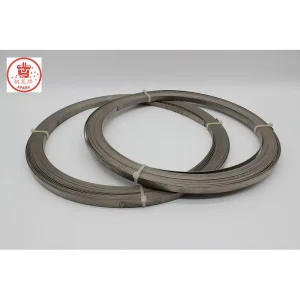
1. Use larger wire diameters or strip ribbons with a higher moment of inertia.
2. Select micro-alloyed rare-earth grades (like 0Cr21Al6Nb or SPARK SGHYZ) or Powder Metallurgy grades (SGHT) engineered for creep resistance.
3. Optimize ceramic support spacing (e.g., using multi-tier ceramic pegs or continuous ceramic grooves).
Q5: Can FeCrAl resistance wire be welded, and what is the proper procedure?
Yes, FeCrAl wire can be welded to terminal lead-out rods (typically thick NiCr or low-carbon steel rods). The recommended technique is TIG (GTAW) welding without filler metal or using matching FeCrAl filler. Because FeCrAl experiences grain growth and embrittlement in the heat-affected zone (HAZ), mechanical clamping or crimping inside heavy terminal blocks is often preferred over direct fusion welding for elements operating at 1200°C.
Q6: How does pre-oxidation treatment extend the service life of 1200℃ resistance wire?
Pre-oxidation involves heating clean resistance wire in air to 1050°C–1100°C for 8 to 12 hours before introducing operational loads or aggressive process gases. This initial thermal soak forms a uniform, dense, crack-free protective oxide layer ($\alpha\text{-}Al_2O_3$ on FeCrAl or $Cr_2O_3$ on NiCr) that seals the underlying metal substrate against subsequent atmospheric chemical attack and thermal shock degradation.
Q7: What are the standard lead times and MOQs when buying from China manufacturers?
Standard stock wire diameters (0.5mm to 6.0mm in common grades like 0Cr25Al5 and Cr20Ni80) typically ship within 3 to 7 business days. Custom alloy compositions, special flat strip sizes, or coiled elements fabricated to engineering drawings generally carry a lead time of 14 to 21 days. Minimum order quantities (MOQs) range from 10 kg for sample testing to 100 kg for custom production heats.
Q8: How do China manufacturers guarantee chemical composition and quality consistency?
Reputable China manufacturers utilize Optical Emission Spectroscopy (OES) and ICP-AES analysis on every liquid heat before tapping the ladle. Post-drawing inspection includes continuous eddy-current flaw detection, laser micrometer dimension tracking, soft-annealing hardness testing, and room-temperature electrical resistance measuring according to ISO 9001 quality systems. Every shipment includes a certified EN 10204 3.1 Mill Test Report.