
Featured 1100°C Industrial Heating Alloys & Custom Elements
Direct factory-supplied high-temperature resistance wire, strip, and pre-formed heating elements engineered for continuous 1100°C to 1400°C thermal processing.


Comprehensive Metallurgy of 1100°C Heating Alloys: FeCrAl vs. NiCr
Selecting resistance alloys for 1100°C service demands a rigorous evaluation of microstructural kinetics, electrical resistivity stability, hot strength, and oxide film adhesion. Shougang Gitane leverages over 60 years of advanced metallurgical melting to produce alloys optimized for extreme thermal environments.
1. Oxide Scale Formation Kinetics: $\alpha-Al_2O_3$ vs. $Cr_2O_3$
At an operating threshold of 1100°C, resistance heating alloys rely entirely on self-passivating protective oxides to prevent catastrophic rapid oxidation. The two primary alloy families behave fundamentally differently:
- FeCrAl Alloys (e.g., 0Cr23Al5, 0Cr21Al6Nb, SG140): Form an exceptionally dense, thermally insulating alpha-alumina ($\alpha-Al_2O_3$) surface layer. $\alpha-Al_2O_3$ exhibits a parabolic oxidation growth rate constant far lower than chromium oxide, allowing continuous exposure up to 1250°C–1400°C without excessive scale spallation.
- NiCr Alloys (e.g., Cr20Ni80, Cr20Ni40 / NiCrFe): Form a chromia ($Cr_2O_3$) surface scale supported by a nickel-rich substrate layer. While $Cr_2O_3$ provides outstanding mechanical ductility and thermal shock resistance during rapid cycling, it begins to undergo volatilization ($Cr_2O_3 \rightarrow CrO_3$) in oxidizing environments above 1100°C, making precise chemical tuning vital.
2. Microstructural Creep & Kirkendall Voiding Mitigation
A frequent cause of failure in 1100°C resistance heating elements is high-temperature sagging and intergranular void formation. At 1100°C, iron-chromium-aluminium alloys feature a body-centered cubic (BCC) crystal lattice, which exhibits lower hot strength than the face-centered cubic (FCC) austenitic lattice of nickel-chromium alloys.
To overcome this, Shougang Gitane incorporates specialized micro-alloying techniques. By introducing reactive elements (RE) such as Yttrium (Y), Cerium (Ce), and Niobium (Nb), our metallurgical engineers pin grain boundaries, drastically reducing Kirkendall void accumulation at the metal-oxide interface and boosting creep rupture resistance by over 300% compared to standard commercial grades.
Technical Specification Matrix: Standard 1100°C Operating Grades
| Alloy Grade | Structure Family | Max Temp (°C) | Resistivity @ 20°C (μΩ·m) | Density (g/cm³) | Thermal Expansion (10⁻⁶/K) | Primary Industrial Application |
|---|---|---|---|---|---|---|
| Cr20Ni80 (SPARK S80) | Austenitic (Ni-Cr) | 1200 | 1.09 ± 0.05 | 8.40 | 18.0 | High-precision furnaces, fast cycling, industrial ovens |
| Cr20Ni40 (NiCrFe) | Austenitic (Ni-Cr-Fe) | 1100 | 1.04 ± 0.05 | 8.10 | 16.8 | Cost-effective 1100°C heat treatment, radiant heaters |
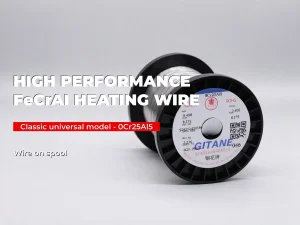
| 0Cr23Al5 | Ferritic (Fe-Cr-Al) | 1250 | 1.35 ± 0.05 | 7.25 | 14.0 | General industrial heating, kilns, heavy machinery |
| 0Cr21Al6Nb | Ferritic (Fe-Cr-Al-Nb) | 1350 | 1.45 ± 0.07 | 7.10 | 14.0 | High-load 1100°C–1300°C industrial tempering & sintering |
| SG140 / SPARK 140 | Modified FeCrAl + RE | 1400 | 1.45 ± 0.05 | 7.10 | 14.2 | Heavy-duty tempering furnaces, ceramic sintering kilns |
Macro Industry Solutions: Engineering 1100°C Thermal Systems
Our 1100°C heating alloys serve as the thermal backbone for key global industries, providing precise temperature uniformity, extended lifespan, and zero-contamination heating.
Photovoltaic & Semiconductor Manufacturing
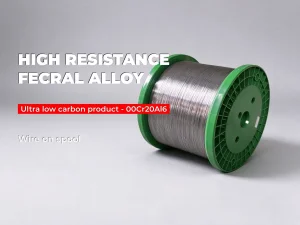
In silicon ingot crystallization, wafer diffusion furnaces, and LPCVD systems operating at 1000°C–1150°C, element purity is vital. Shougang Gitane’s ultra-low carbon 00Cr20Al6 and SGHT alloys eliminate heavy-metal outgassing, ensuring ultra-clean thermal processing.
Automotive & Aerospace Heat Treatment
Continuous carburizing, annealing, and tempering furnaces demand elements capable of withstanding aggressive carbon potential and thermal shock. Our Cr20Ni80 and SG140 strip products deliver maximum dimensional stability under rapid cycling.
Petrochemical Process & Hydrogen Heaters
High-pressure electric process heaters and gas reformers require resistance wire sealed inside mineral-insulated sheath tubes. Our specialized NiCr40 and 0Cr23Al5 wire grades offer consistent cold-drawing tolerances for tight compaction integrity.
Technology Roadmap: Next-Gen High-Temperature Resistance Alloys
As global industrial manufacturing transitions toward complete electrification and decarbonization, high-temperature heating alloys must overcome traditional thermal limits.
R&D Horizons: 2025–2030 Innovations at Shougang Gitane
- Powder Metallurgy (PM) Dispersion-Strengthened FeCrAl: Utilizing oxide dispersion strengthening (ODS) via nano-scale $Y_2O_3$ particles to achieve 1425°C operational capability with zero thermal sag.
- Hydrogen Atmosphere Compatibility: Developing advanced surface pre-passivation techniques to maintain structural oxide layers in pure $H_2$ reducing environments.
- Ultra-Fine Micro-Wire Drawing (<0.02mm): Expanding high-precision drawing lines for specialized medical devices, micro-reactors, and aerospace sensor heating elements.
China Factory 4.0: Supply Chain Resilience & Pricelist Guidelines
As part of the state-owned Shougang Group, Beijing Shougang Gitane New Materials Co., Ltd. operates a fully integrated melt-to-finish production system. Our 88,000 m² Shahe manufacturing complex guarantees complete traceabilty from raw ingot to finished wire.
Understanding 1100°C Heating Alloy Pricelist Drivers
Purchasing resistance heating wire directly from a Chinese primary mill provides substantial cost efficiency. Pricing is dynamic and calculated based on three key parameters:
- Raw Material LME Index Surcharges: Nickel (LME Ni) and Chromium spot prices directly govern NiCr alloy pricing. FeCrAl alloys offer a significantly lower, highly stable cost structure because iron and aluminium are the base elements.
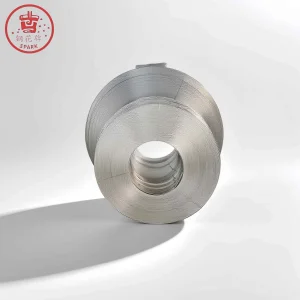
- Dimensional Drawing Complexity & Annealing Requirements: Heavy gauge rod (3.0mm–8.0mm) carries lower processing costs per kg compared to ultra-fine wire (0.05mm–0.20mm) which requires multiple diamond-die drawing passes and bright atmosphere annealing cycles.
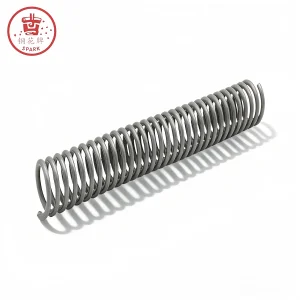
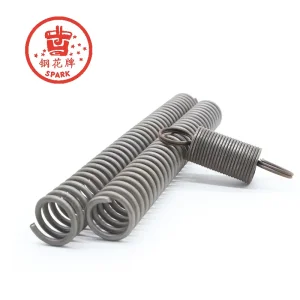
- Custom Fabrication & Surface Treatment: Supply forms such as pre-wound spiral coils, wave-shaped elements, oxidized golden-finish surfaces, or custom spooling impact final factory quotation pricing.
| Product Category | Standard Specification Range | Minimum Order Quantity (MOQ) | Pricelist Tier Structure ($/kg indicative) |
|---|---|---|---|
| FeCrAl Wire (0Cr23Al5, 0Cr25Al5) | 0.5mm – 8.0mm Round Wire | 50 kg per size | Factory Tier A (Most Economical) |
| High-Grade FeCrAl (0Cr21Al6Nb, SG140) | 0.2mm – 6.0mm Wire / Strip | 100 kg per size | Factory Tier B (Mid-Performance) |
| NiCr Alloy Wire (Cr20Ni80, Cr20Ni40) | 0.1mm – 7.0mm Wire / Ribbon | 25 kg per size | Factory Tier C (LME Nickel Indexed) |
| Pre-Formed Heating Elements / Coils | Customized to Engineering Drawings | 10 Sets / Custom Lot | Turnkey Fabrication Quote |
Global Procurement & Engineering Surface Load Calculation
Designing a reliable 1100°C electric heating element requires balancing electrical power rating, surface load ($W/cm^2$), and operating atmosphere correction factors.
Engineering Formula: Surface Load Calculation
To avoid premature alloy burnout, furnace designers must compute element surface load ($w$):
w = P / (π · d · L)
Where P is total power (Watts), d is wire diameter (cm), and L is total active length (cm). For 1100°C operating air temperatures, recommended maximum surface load limits are:
- FeCrAl (0Cr21Al6Nb / SG140): $1.8 - 2.5 \, W/cm^2$ (Industrial Furnaces)
- NiCr (Cr20Ni80): $1.5 - 2.2 \, W/cm^2$ (Precision Thermal Processing)
Additional High-Temperature Resistance Products & Pricelists
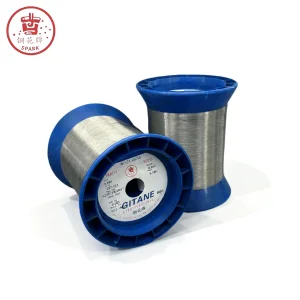
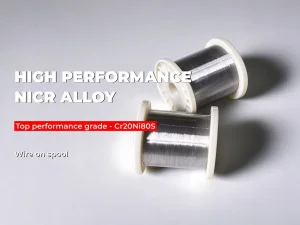
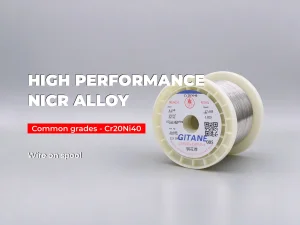
Explore our complete product catalog including specialty NiCrFe alloys, ultra-high temperature resistance wire, and integrated ceramic fiber heating modules.

Quality Compliance, International Standards & Export Packaging
Shougang Gitane operates under strict international quality controls. Every shipment is delivered with certified material test reports (MTR) compliant with EN 10204 3.1 standards.
Manufacturing & Testing Standards
- ISO 9001:2015 & ISO 14001: Certified quality and environmental management systems.
- GB/T 1234-2012: China National Standard for High-Resistance Electric Heating Alloys.
- ASTM B344 & DIN 17470 Equivalent: Fully tested for international cross-reference compatibility.
- 100% Eddy Current Test: Wire surfaces inspected for zero micro-cracks and uniform resistivity.
Seaworthy Export Logistics
Wire products are precision-spooled onto plastic bobbins or packed in coils, vacuum-sealed with desiccant in moisture-proof foil packaging, and reinforced in custom export wooden crates to prevent oxidation or mechanical damage during long ocean transit.
Frequently Asked Questions: 1100°C Heating Alloy Technical Selection
Expert technical answers addressing core engineering, procurement, and alloy longevity questions.