Featured High-Temperature Resistance Heating Wire Catalog
Explore China's premier selection of electric thermal alloys, precision spools, ultra-high temperature FeCrAl elements, and NiCr resistance wires direct from certified ISO9001 mills.




0Cr25Al5 Metallurgical Architecture & Thermal Physics
Understanding the elemental phase stability, high electrical resistivity, and oxide scale growth kinetics of ferritic iron-chromium-aluminium heating alloys under extreme heat duty.
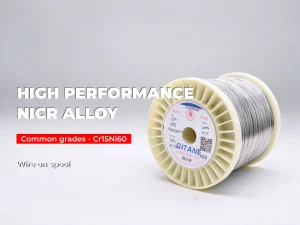
In the field of electrothermal materials, 0Cr25Al5 (equivalent to W.Nr. 1.4765, UNS K92500, and commercially comparable to Kanthal D / Alkrothal) represents the benchmark for ferritic Iron-Chromium-Aluminium (FeCrAl) resistance alloys. Specifically engineered for industrial applications requiring high thermal efficiency, maximum continuous operation temperatures up to 1250°C (2280°F), and superior resistivity, 0Cr25Al5 delivers exceptional performance across heavy thermal processing systems.
Chemical Composition & Trace Element Engineering
The operational lifespan and thermal stability of 0Cr25Al5 wire are strictly dictated by its precise elemental formulation during Electric Arc Furnace (EAF) melting and Vacuum Induction Melting (VIM). Below is the standard chemical composition matrix per Chinese GB/T 1234-2012 standards:
| Elemental Constituent | Weight Percentage (%) | Metallurgical Role & Engineering Impact |
|---|---|---|
| Chromium (Cr) | 23.0% – 26.0% | Enhances oxidation resistance and base thermal hardness; provides basic corrosion barrier. |
| Aluminium (Al) | 4.5% – 6.5% | Forms self-healing protective $\alpha\text{-Al}_2\text{O}_3$ scale; primary driver of electrical resistivity. |
| Iron (Fe) | Balance (~67% - 72%) | Ferritic matrix structural base providing economic viability and structural integrity. |
| Carbon (C) | ≤ 0.06% | Strictly controlled to prevent coarse carbide precipitation at grain boundaries. |
| Silicon (Si) | ≤ 0.70% | Deoxidizing agent during melting; improves fluidity during precision casting. |
| Manganese (Mn) | ≤ 0.70% | Improves hot-workability during billet breakdown and rod extrusion. |
| Rare Earths (Y/Ce/La) | Trace Additions | Reactive elements (RE) added to lock oxide scale, preventing spallation during thermal cycling. |
Oxidation Mechanics & $\alpha$-Alumina Passivation Layer
When subjected to temperatures above 900°C in an oxidizing atmosphere, 0Cr25Al5 wire undergoes a selective oxidation process. Aluminium rapidly diffuses to the surface, reacting with ambient oxygen to produce a continuous, non-porous layer of alpha-alumina ($\alpha\text{-Al}_2\text{O}_3$). This oxide layer acts as an electrical insulator and a physical oxygen diffusion barrier, dramatically slowing further internal metal degradation. Unlike nickel-oxide scales formed on NiCr alloys, the $\alpha\text{-Al}_2\text{O}_3$ scale is chemically inert, resistant to sulfur-containing gases, and self-repairing in the presence of trace atmospheric oxygen.
China's Upstream Supply Chain & Production Advantage
How vertically integrated state-backed metallurgical groups drive precision, scale economies, and unbeatable pricing across international B2B procurement channels.
Purchasing 0Cr25Al5 heating wire from top Chinese manufacturers provides global OEM manufacturers and furnace engineering outfits with substantial competitive leverage. China dominates global raw material refining for high-purity Ferro-Chromium and Aluminium ingot feedstock. Leading Chinese producers—such as Beijing Shougang Gitane New Materials—leverage end-to-end integration: from vacuum melting and ingot casting, through hot-rolling wire rod mills, to multi-pass diamond-die bright drawing plants.
Key Manufacturing Capabilities of Leading Chinese Mills:
- Electroslag Remelting (ESR) & Vacuum Degassing: Eliminates non-metallic inclusions, ensuring consistent cross-sectional grain structure and preventing premature element burnout caused by local hot spots.
- Controlled-Atmosphere Bright Annealing: Hydrogen-atmosphere continuous annealers yield a pristine, oxide-free bright surface finish ($0.05\text{ mm}$ to $10.0\text{ mm}$ diameters), ensuring flawless automatic coil winding without micro-cracking.
- In-Line Laser Diameter Monitoring: Real-time dual-axis optical gauging guarantees dimensional tolerance within strictly controlled ISO/GB standards, maintaining precise resistance per meter ($R/m$) values.
0Cr25Al5 Price List Benchmark & Sourcing Economics
Transparent pricing structures, gauge factors, surface treatment differentials, and minimum order quantity (MOQ) logic for international procurement teams.
Understanding the pricing drivers behind China 0Cr25Al5 electric resistance alloy wire requires evaluating raw material index prices (Fe, Cr, Al), mechanical cold-working passes, and finishing steps. Unlike standard carbon steel wire, high-resistance thermal wire pricing is quoted based on wire diameter gauge, spool packaging type, thermal treatment, and order volume.
Fine Wire Gauges (< 0.20 mm)
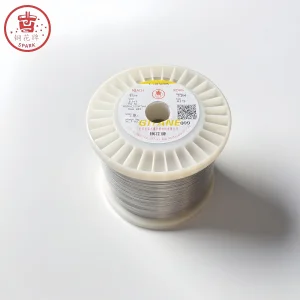
Requires multiple diamond-die cold drawing passes and intermediate hydrogen anneals. Pricing ranges higher per kilogram due to intensive processing time, supplied on plastic spools (DIN100-DIN200).
Medium Heavy Gauge (0.5 – 3.0 mm)
Standard industrial furnace wire gauge. Offers the best balance between production throughput and cost per kg. Supplied in 25-50 kg spools or catchweight coils.
Heavy Rod & Strip (> 3.0 mm / Flat)
Used for heavy industrial heat-treating furnace elements (meander coils, wave shapes). Priced close to base ingot costs plus rolling/annealing surcharges.
0Cr25Al5 Factory Price List Matrix (Indicative Reference Sourcing Ranges)
Note: Actual FOB/CIF pricing fluctuates based on Shanghai Metal Exchange (SMM) chromium/aluminium spot rates and currency exchange rates. Request official factory quotes for binding figures.
| Wire Diameter Range (mm) | Resistivity at 20°C ($\Omega\cdot\text{m}\times 10^{-6}$) | Surface Condition | Packaging Type | Estimated FOB Price Range (USD/kg) |
|---|---|---|---|---|
| 0.05 mm – 0.15 mm | 1.42 ± 0.05 | Bright Annealed | DIN100 / DIN125 Spools | $14.50 – $22.00 / kg |
| 0.20 mm – 0.80 mm | 1.42 ± 0.04 | Bright / Acid-Pickled | DIN160 / DIN200 Spools | $9.80 – $14.00 / kg |
| 1.00 mm – 3.00 mm | 1.42 ± 0.03 | Oxidized / Bright | Spools or 25kg Coils | $6.80 – $9.50 / kg |
| 3.25 mm – 8.00 mm | 1.42 ± 0.03 | Oxidized / Matt Finish | 50kg – 100kg Coils / Rods | $5.50 – $7.80 / kg |
| Flat Strip (0.2x2mm to 3x40mm) | 1.42 ± 0.04 | Bright Cold-Rolled | Pancake Coils | $7.20 – $11.50 / kg |
Industry Trends: Decarbonization & Next-Gen FeCrAl Technologies
The shift toward electric thermal processing, powder metallurgy alloys (SGHT/SGHYZ), and comparative analysis against Nichrome (Cr20Ni80).
1. Global Kiln Electrification & Industrial Decarbonization
With worldwide carbon reduction mandates, steelmakers, glass producers, and advanced ceramic foundries are rapidly replacing gas-fired burner systems with zero-emission electric resistance heating. FeCrAl alloys like 0Cr25Al5 serve as the primary heating technology in this transition, offering high power density, thermal efficiency above 95%, and seamless integration with renewable microgrids.
2. Powder Metallurgy FeCrAl (SGHT / SGHYZ) vs. Melted 0Cr25Al5
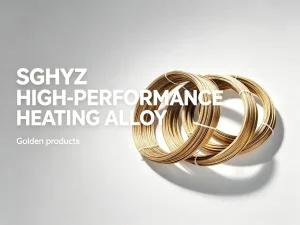
While standard ingot-melted 0Cr25Al5 handles 1250°C continuous service, ultra-demanding applications (such as semiconductor silicon ingot growth and lithium battery cathode sintering) require higher hot-strength. Chinese manufacturers have pioneered Powder Metallurgy (PM) FeCrAl alloys—such as SPARK SGHT (up to 1425°C) and SGHYZ (up to 1400°C)—which utilize oxide dispersion strengthening (ODS) to prevent grain growth, sagging, and creep deformation at extreme temperatures.
3. Comprehensive Comparison: 0Cr25Al5 (FeCrAl) vs. Cr20Ni80 (Nichrome)
| Performance Parameter | 0Cr25Al5 (FeCrAl Family) | Cr20Ni80 (Nichrome Family) | Engineering Selection Rule |
|---|---|---|---|
| Max Service Temperature | 1250°C | 1200°C | FeCrAl preferred for continuous high-temperature industrial kilns. |
| Electrical Resistivity (20°C) | 1.42 $\mu\Omega\cdot\text{m}$ | 1.09 $\mu\Omega\cdot\text{m}$ | 0Cr25Al5 allows larger wire cross-sections and longer element lifespan. |
| Material Density | 7.10 $\text{g/cm}^3$ | 8.40 $\text{g/cm}^3$ | FeCrAl yields ~15% material weight savings for identical element size. |
| Hot Mechanical Strength | Moderate (prone to sagging) | High (retains ductility) | NiCr preferred for complex suspended elements or rapid thermal cycling. |
| Sulfur Atmosphere Resistance | Excellent (Protected by $\alpha\text{-Al}_2\text{O}_3$) | Poor (Forms low-melt NiS) | FeCrAl mandatory in sulfur-bearing gas atmospheres. |
| Raw Material Cost | Economical (Iron-based) | Expensive (High Nickel content) | 0Cr25Al5 lowers total cost of ownership (TCO) substantially. |
Industrial Application Scenarios & Design Parameters
Where and how 0Cr25Al5 resistance wire is implemented across automotive, ceramic, metallurgy, energy storage, and home heating industries.
1. Industrial Heat Treatment Kilns
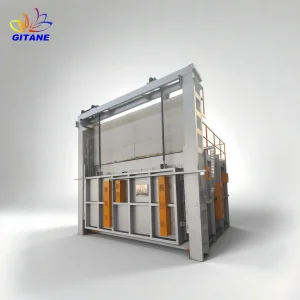
Widely utilized in box furnaces, annealing pits, mesh belt conveyor furnaces, and carburizing equipment operating between 900°C and 1200°C. 0Cr25Al5 formed into spiral coils or meander strip elements delivers uniform thermal distribution.
2. Ceramic & Glass Sintering
Ideal for ceramic tile roller kilns, porcelain firing, and glass tempering lines. The chemically passive alumina film prevents material contamination in high-purity glass and sanitaryware production.
3. High-Power Braking Resistors
Used in heavy industrial electric trains, crane hoisting systems, and wind turbine pitch control systems as dynamic braking resistor grids due to high pulse-power tolerance and stable resistance temperature coefficient.
4. Domestic & Commercial Appliances
Found inside quartz tube heaters, convection heaters, hand dryers, mica plate heaters, and toaster coils where rapid warm-up and economic bill-of-materials are paramount.
5. Clean Energy & Solar PV Equipment
Crucial for heating element arrays in polysilicon reduction furnaces and solar cell annealing tubes, supporting high-vacuum and clean hydrogen gas thermal processes.
6. Exhaust Catalytic Substrates
FeCrAl foil and fine wire meshes serve as metallic catalyst carriers in automotive exhaust gas aftertreatment systems due to high shock-load and thermal oxidation tolerance.
Quality Compliance, Certification & Export Packaging
Ensuring seamless international customs clearance, certified material test reports (MTC), and anti-corrosion ocean freight packing.
Purchasing resistance heating alloys internationally requires stringent compliance guarantees. Premier Chinese exporters enforce strict quality management systems complying with ISO 9001:2015, ISO 14001, and European environmental directives.
Certifications & Quality Documentation Provided with Every Shipment:
- EN 10204 3.1 Mill Test Certificate (MTC): Detailing exact chemical spectrographic analysis, room-temperature tensile strength, elongation percentage, and measured electrical resistance per meter.
- REACH & RoHS 3 Compliance: Verified free of lead, cadmium, mercury, hexavalent chromium, and SVHC (Substances of Very High Concern).
- Accelerated Life Testing (GB/T 1234 Standard): Wire batches undergo accelerated burn-in testing to verify hours-to-failure ratios under simulated 1200°C thermal stress.
Frequently Asked Questions (FAQ) for Procurement Engineers
Detailed technical answers to common questions regarding selection, installation, price negotiations, and factory audits.
Complete High-Performance Alloy & Heating Element Series
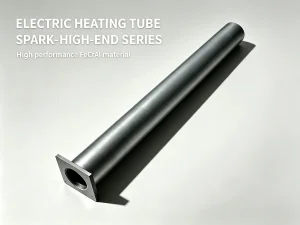
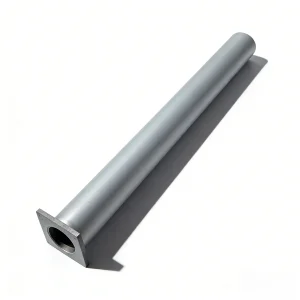
Explore additional specialized FeCrAl tubes, ultra-high temperature SGHYZ wires, customized industrial furnaces, and OEM electric heating element products.