Featured SPARK Electrothermal Alloy & Furnace Products


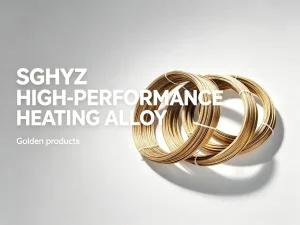



Executive Summary & Microstructural Fundamentals of 00Cr20Al6
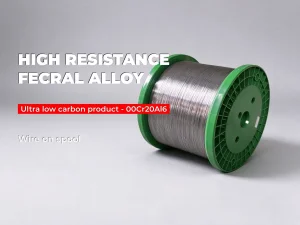
In modern high-temperature industrial heating engineering, selection of the optimal electrothermal resistance alloy dictates thermal efficiency, operational longevity, and furnace power density. 00Cr20Al6 represents a pinnacle grade within the ferritic Iron-Chromium-Aluminium (FeCrAl) alloy matrix. Engineered specifically with an ultra-low carbon (C ≤ 0.02%) chemistry, 00Cr20Al6 delivers extraordinary resistance to high-temperature creep, intergranular oxidation, and thermal fatigue up to maximum element operating temperatures of 1350°C (2462°F).
The chemical design of 00Cr20Al6 balances approximately 20.0% to 23.0% Chromium (Cr) and 5.5% to 6.5% Aluminium (Al), fortified with micro-alloyed Reactive Elements (RE) such as Yttrium (Y), Zirconium (Zr), and Cerium (Ce). When energized in an oxidizing ambient or vacuum environment, the aluminium constituent diffuses outward toward the metallic interface to form an adherent, thermodynamically stable alpha-alumina oxide scale ($\alpha\text{-Al}_2\text{O}_3$). This ceramic surface layer acts as an impervious barrier against further oxygen penetration, carburization, and chemical attack by volatile industrial vapors.
Comparative Engineering Matrix: 00Cr20Al6 vs. Industry Alternatives
Procurement directors and thermal system design engineers must evaluate performance trade-offs between traditional Nickel-Chromium (NiCr) alloys and advanced FeCrAl series. The table below presents an empirical comparative breakdown compliant with GB/T 1234-2012, ASTM B603, and international industrial furnace guidelines.
| Property Parameter | 00Cr20Al6 (FeCrAl) | 0Cr25Al5 (Standard FeCrAl) | Cr20Ni80 (Nichrome) | Kanthal A1 Equivalent |
|---|---|---|---|---|
| Maximum Element Temp (°C) | 1350°C | 1250°C | 1200°C | 1400°C |
| Resistivity at 20°C ($\mu\Omega\cdot\text{m}$) | $1.45 \pm 0.05$ | $1.42 \pm 0.05$ | $1.09 \pm 0.04$ | $1.45 \pm 0.05$ |
| Alloy Density ($\text{g/cm}^3$) | 7.10 | 7.10 | 8.40 | 7.10 |
| Carbon Chemistry (%) | $\le 0.02$ (Ultra-Low) | $\le 0.08$ | $\le 0.08$ | $\le 0.08$ |
| Hot Creep Strength | Enhanced (RE Fortified) | Moderate | Superior | High (PM Route) |
| Atmospheric Resistance | Air, $\text{H}_2$, $\text{N}_2$, Sulfur | Air, Moderate $\text{S}$ | Carburizing, Neutral | Air, High Temp Gas |
| Post-Use Ductility | Moderate-High (Low C) | Low (Brittle) | Very High | Moderate |
Key Metallurgical Advantages of 00Cr20Al6
- Higher Electrical Resistivity (1.45 $\mu\Omega\cdot\text{m}$): Compared to NiCr alloys (1.09 $\mu\Omega\cdot\text{m}$), 00Cr20Al6 enables element designers to use thicker wire cross-sections for the same resistance value. Thicker wire leads to significantly longer service life and reduced susceptibility to physical sagging.
- Density Advantage & Material Savings: With a density of 7.10 g/cm³ against 8.40 g/cm³ for NiCr, 00Cr20Al6 yields approximately 15.5% material weight savings for identical element coil surface areas, vastly lowering capital expenditure.
- Reactive Element Effect (REE): Controlled micro-dosing of Rare Earth metals promotes dynamic self-healing of the protective $\alpha\text{-Al}_2\text{O}_3$ scale during cycling thermal shocks, preventing scale spallation.
Microstructural Evolution & High-Temperature Creep Resistance
At temperatures exceeding 1000°C, metallic crystal lattices undergo thermal agitation leading to dislocation migration, grain boundary sliding, and rapid grain growth. In standard FeCrAl alloys, uncontrolled grain coarsening results in low creep resistance, causing horizontal furnace heating coils to deform, sag, and short-circuit against refractories.
Chinese state-of-the-art mills, including Beijing Shougang Gitane, utilize advanced Vacuum Induction Melting (VIM) followed by Electroslag Remelting (ESR) to produce 00Cr20Al6 billets with extreme elemental uniformity. The micro-addition of Yttrium and Zirconium forms stable nano-oxide dispersions ($\text{Y}_2\text{O}_3$, $\text{ZrO}_2$) within the grain matrix. These nano-precipitates act as pinning sites along grain boundaries—a process known as Zener Pinning.
China's Supply Chain Resilience & Manufacturing Efficiency in Electrothermal Alloys
As global industrial supply chains demand uninterrupted stability, competitive pricing, and certified quality compliance, China's electrothermal alloy manufacturing ecosystem—led by dedicated state-level facilities—delivers unmatchable enterprise value.
Why Partner with Leading Chinese 00Cr20Al6 Factories?
Raw Material Autonomy
China commands world-leading refining capacity for chromium, high-purity aluminium, and rare earth elements (Yttrium/Lanthanum). Direct access to raw materials shields overseas buyers from geopolitical price volatility.
End-to-End Metallurgy
From initial vacuum melting and continuous billet casting to ultra-fine wire drawing (down to 0.05mm) and hydrogen bright annealing, full in-house processing ensures 100% lot-to-lot consistency.
Rigorous Inspection & Traceability
Every batch of 00Cr20Al6 is subjected to optical emission spectroscopy (OES), spectral resistance verification, tensile ductility testing, and accelerated high-temperature life testing per GB/T 1234-2012.
High-Value Industrial Applications of 00Cr20Al6 Alloy
The specialized properties of 00Cr20Al6 make it the preferred material across demanding green-tech, energy, and heavy industrial sectors globally.
1. Lithium Battery Cathode Sintering Kilns
Production of Lithium Iron Phosphate (LFP) and Nickel-Manganese-Cobalt (NMC) cathode materials requires continuous roller hearth kilns running at 850°C to 1100°C under aggressive atmospheric conditions. 00Cr20Al6 element coils resist lithium gas attack and prevent particle shedding, ensuring battery-grade chemical purity.
2. Semiconductor Diffusion & Solar Wafer Furnaces
Photovoltaic silicon crystal growing and wafer diffusion processes operate continuously near 1300°C. 00Cr20Al6 strip and heavy wire elements provide low outgassing and ultra-stable thermal profiles needed for high silicon yield rates.
3. Industrial Heat Treatment & Carburizing Lines
In mesh-belt tempering, annealing, and hardening furnaces, heating elements endure carbon-rich environments. The impermeable $\alpha\text{-Al}_2\text{O}_3$ scale of 00Cr20Al6 resists carbon penetration ("green rot"), doubling life expectancy versus standard NiCr elements.
4. Petrochemical & Catalytic Thermal Oxidizers
Used as woven wire mesh or honeycomb substrates in catalytic converters and volatile organic compound (VOC) incinerators, 00Cr20Al6 maintains structural integrity under rapid thermal cycling and high gas flow velocities.
Technological Roadmap & Future Outlook of FeCrAl Alloys
As global industrial decarbonization accelerates, high-temperature electric heating systems are rapidly replacing fossil-fuel combustion burners in steel forging, glass melting, and cement calcination. This transition requires electrothermal materials that exceed historical thermal limits.
Phase 1: Oxide Dispersion Strengthened (ODS) FeCrAl Alloys
Integration of Powder Metallurgy (PM) processing to disperse nanometer-scale yttria particles ($\text{Y}_2\text{O}_3$) throughout the 00Cr20Al6 matrix, elevating creep rupture strength up to 1425°C.
Phase 2: Hydrogen-Annealed Zero-Carbon Processing
Transitioning factory annealing furnaces to 100% green hydrogen atmospheres, eliminating scope 1 and 2 carbon footprints during alloy drawing and wire manufacturing.
Phase 3: Surface-Engineered Pre-Oxidation Treatments
Factory-applied plasma pre-oxidation creating an optimized 2-micron alpha-alumina scale prior to shipment, guaranteeing instant startup reliability for end customers.
Global Quality Compliance & Localized Technical Support
Top-tier Chinese suppliers like Beijing Shougang Gitane operate under strict international quality governance systems to ensure flawless integration into global supply chains.
- ISO 9001:2015 & ISO 14001: Certified Quality & Environmental Management
- GB/T 1234-2012 Compliance: National Standard for High-Resistance Alloys
- RoHS & REACH Certified: Free from Hazardous Heavy Metal Contaminants
- EN 10204 3.1 MTC: Full Material Traceability with Mill Test Certificates
Frequently Asked Questions: 00Cr20Al6 Engineering & Purchasing
Complete SPARK Resistance Alloy Product Catalog