Customized Resistance Wires & Precision Heating Alloys
Explore our premier selection of high-temperature resistance wires, micro-filaments, and custom alloy formulations manufactured under strict ISO 9001 quality controls.

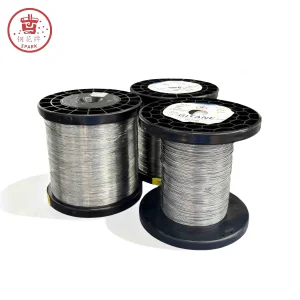
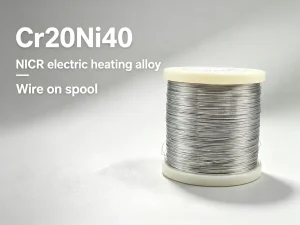

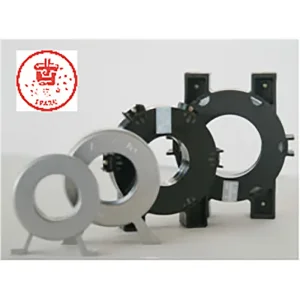
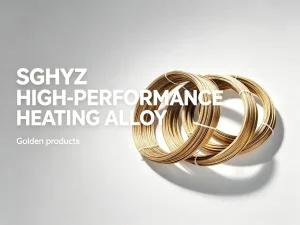

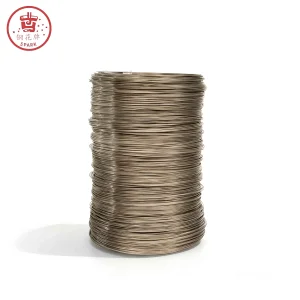
High-Precision Wire Drawing & Process Customization: Elevating Electric Heating Alloy Performance
In the contemporary industrial thermal engineering landscape, the operational integrity of high-temperature electrical heating elements is intrinsically linked to material purity, crystalline stability, and dimensional tolerances. Modern thermo-process technology—spanning advanced semiconductor wafer synthesis, medical micro-device fabrication, precision aerospace heat treatment, and high-density energy storage system production—demands thermal elements engineered to micro-meter level precision.
As a flagship brand backed by over 60 years of metallurgical legacy from Beijing Shougang Gitane New Materials Co., Ltd. (Shougang Group), SPARK has established an engineering benchmark in custom electrothermal alloy production. By bridging state-of-the-art vacuum induction melting (VIM) with continuous diamond-die multi-pass cold drawing, we achieve an unprecedented wire diameter tolerance control within ±0.002mm for ultra-fine high-resistance wire and micro-filaments.
This whitepaper elucidates the critical engineering mechanics, macro-industry solutions, microstructural dynamics, and global procurement paradigms that define custom high-precision heating wire manufacturing in China.
Global Enterprise Procurement Requirements for High-Precision Wire
How Tier-1 industrial buyers evaluate supplier capabilities, risk management protocols, and overall Total Cost of Ownership (TCO) in electric resistance alloy sourcing.
Dimensional Uniformity & Resistance Stability
Variation in wire cross-section directly dictates electrical resistance ($R = \rho \frac{L}{A}$). A minute deviation in wire diameter creates localized resistance spikes, leading to hot spots, uneven thermal dissipation, premature creep failure, and costly furnace shutdowns. Controlling wire tolerances to ±0.002mm guarantees consistent power density across the entire coil length.
Lot-to-Lot Metallurgical Consistency
Global OEMs require strict reproducibility. Vacuum melting, secondary electroslag refining (ESR), and precise addition of reactive rare-earth elements (RE, such as Yttrium, Zirconium, and Hafnium) ensure that every batch exhibits identical thermal expansion coefficients, resistance temperature coefficients (RTC), and grain growth kinetics.
Custom Mechanical & Surface Processing
Specific winding machine mechanics require tailored elongation, yield strength ratios, and surface lubrication states. Enterprise buyers demand custom packaging (plastic spools, DIN standard reels, wooden cases), pre-oxidized golden surfaces, and specific temper conditions (annealed soft vs hard drawn) optimized for automated winding lines.
Technological Process & Quality Control Framework
How SPARK achieves ±0.002mm tolerance through integrated metallurgical engineering and real-time laser micrometer feedback loops.
| Process Stage | Technical Mechanism | Control Parameters | Quality Assurance Outcome |
|---|---|---|---|
| 1. Smelting & Refining | Vacuum Induction Melting (VIM) + ESR refining for low trace impurity content (S, P, C). | Purity ≥ 99.85%, precise Fe-Cr-Al / Ni-Cr element balancing. | Eliminates internal inclusions and micro-voids prior to hot working. |
| 2. Hot Rolling & Billet Prep | Controlled atmosphere breakdown rolling and continuous billet conditioning. | Temperature profile control ±10°C, zero surface decarb/scale. | Uniform equiaxed grain structure across the rod cross-section. |
| 3. Multi-Pass Cold Drawing | Sequential drafting using polished natural diamond and PCD (Polycrystalline Diamond) dies. | Draft reduction ratio per pass 8%–12%, synthetic oil emulsion cooling. | Prevents micro-scratching; establishes initial ultra-precise geometry. |
| 4. Laser Micrometry Feedback | Dual-axis high-frequency laser scan gauges positioned immediately post-die. | Continuous sampling at 1000 Hz, dynamic auto-adjustment of drawing tension. | Verifies and holds wire diameter tolerance strictly within ±0.002mm. |
| 5. Bright Annealing | Continuous horizontal hydrogen-atmosphere tube furnace heat treatment. | Dew point ≤ -60°C, precise furnace speed and temperature curve. | Achieves mirror-bright, oxide-free surface and uniform mechanical ductility. |
Macro-Industry Solutions Powered by Custom Process Engineering
Delivering tailored metallurgical characteristics to critical global technology sectors.
Semiconductor & Solar Photovoltaics
In crystal growth furnaces (CZ method) and diffusion cassettes, ultra-pure FeCrAl (SGHT and SGHYZ alloys) provides long-term resistance to high temperatures up to 1425°C. The precise ±0.002mm diameter uniformity avoids local thermal distortion, preserving the critical thermal gradient required for single-crystal silicon pulling.
Medical Micro-Devices & Thermal Surgical Tools
Micro-diameter NiCr and Nichrome wires require tight geometric tolerances to fit inside surgical catheters, tissue ablation tips, and micro-fluidic heaters. Ultra-fine wires with ±0.002mm accuracy deliver precise ohmic heating without electrical drift during delicate procedures.
Powder Metallurgy & Industrial Vacuum Furnaces
High-temperature sintering operations require robust element lifespans under continuous thermal cycling. Alloys like HRE and 0Cr21Al6Nb form a dense, protective surface layer of alpha-alumina ($\alpha\text{-Al}_2\text{O}_3$), shielding the interior wire from carbon buildup and atmospheric attack.
Technical Roadmap: Next-Generation Electrothermal Materials
As industrial processes transition towards electrification and decarbonization, electrical heating elements are taking over roles previously dominated by fossil-fuel burner systems. This paradigm shift requires heating alloys to withstand higher temperatures, harsher chemical atmospheres, and faster thermal cycling rates.
1. Oxide Dispersion Strengthened (ODS) Alloys
By incorporating nano-scale Yttrium oxide ($\text{Y}_2\text{O}_3$) particles throughout the FeCrAl matrix via powder metallurgy, next-generation ODS alloys exhibit outstanding high-temperature creep strength. This prevents wire sagging and coil distortion in high-temperature industrial furnaces operating above 1350°C.
2. Sub-Micron Fine Wire Drawing & Smart Sensing Alloys
Ongoing R&D at SPARK focuses on scaling ultra-fine wire drawing to diameters under 0.03mm while maintaining dynamic process tolerances. Simultaneously, integrated dual-function wires—capable of acting as both a heating element and a precise temperature sensing thermocouple—are being engineered for micro-electronic encapsulation systems.
3. Green Smelting & Sustainable Manufacturing
Aligned with global ESG criteria, Shougang Gitane utilizes high-efficiency electric arc furnaces and recycled high-purity scrap streams, reducing the embodied carbon footprint per ton of wire by over 30% compared to traditional smelting processes.
Global Compliance, Quality Control & Logistics Support
Building trust through rigorous testing documentation, certified standards, and complete global supply chain visibility.
Full GB/T 1234 & ASTM Standard Compliance
All SPARK alloys adhere strictly to GB/T 1234-2012 (China National Standard for Resistance Heating Alloys), ASTM B603, DIN 17470, and JIS C2520. Every shipment is delivered with certified Mill Test Reports (MTR) including chemical spectrum analysis, elongation metrics, electrical resistivity tests, and laser diameter scan logs.
Environmental Compliance (RoHS & REACH)
Our alloys comply fully with EU RoHS directives (Restriction of Hazardous Substances) and REACH regulations. Heavy metals such as Lead, Cadmium, Mercury, and Hexavalent Chromium are strictly prohibited during raw material selection and melting phases.
Export Packaging & VMI Inventory Support
To prevent corrosion and surface contamination during transit, products are vacuum-sealed with desiccant packs, wrapped in protective foil, and mounted inside reinforced wooden cases. We provide Vendor Managed Inventory (VMI) services and flexible JIT delivery schedules for contract clients worldwide.
Frequently Asked Questions by Technical Procurement Teams
Detailed engineering answers regarding tolerance limits, alloy selection, surface finish, and customization parameters.
How does SPARK maintain a diameter tolerance of ±0.002mm during volume production? ▼
What is the difference between FeCrAl and NiCr heating alloys in high-precision applications? ▼
Can custom wire products be supplied pre-oxidized or with specific surface finishes? ▼
What is the minimum order quantity (MOQ) for custom wire sizes and customized alloy grades? ▼
What testing data is included with the Mill Test Certificate (MTC)? ▼
Industrial Heating Elements, Coils & Custom Alloys
Browse our secondary line of heating elements, spiral coils, and specialized high-temperature alloy wires engineered for heavy industry.