
How to Choose the Right FeCrAl Alloy for Your Needs
Choosing the right Fecral Alloy starts with the conditions it must survive, not a headline temperature. A heating element in clean air faces different demands from one exposed to frequent thermal cycling, moisture, or process contaminants. Alloy composition, wire diameter, element geometry, and operating atmosphere all influence service life. Small details matter.
Kanthal’s published A-1 alloy datasheet lists a maximum continuous operating temperature of 1,400°C in air and electrical resistivity of 1.45 Ω·mm²/m at 20°C. These figures offer a useful reference, not a universal promise: they apply to a specific commercial grade and stated conditions. The Kanthal handbook also emphasizes that furnace design and operating practice affect element performance. A catalog number cannot tell the whole story.
A practical selection compares the required temperature with the real temperature at the element surface. It also checks startup frequency, available power, atmosphere, mechanical support, and replacement access. For example, a thin coil may heat quickly, but its geometry and loading can leave less room for operational error. That trade-off is easy to overlook. Even experienced buyers can focus too heavily on maximum temperature. A better specification records the atmosphere, duty cycle, element dimensions, and acceptable service interval before comparing grades. This is not perfect certainty; operating conditions often change. Still, a clear checklist makes supplier data easier to verify and helps match a Fecral Alloy to the actual job.
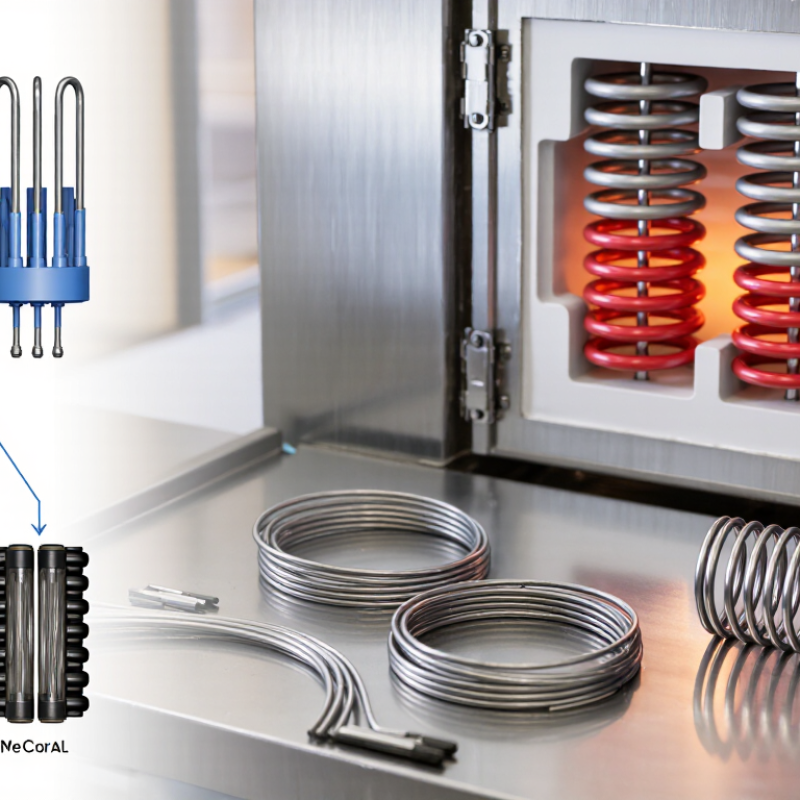
Understanding FeCrAl Alloy Composition and Operating Principles
How to Choose the Right FeCrAl Alloy for Your Needs
FeCrAl alloys combine iron, chromium, and aluminum. Their exact proportions vary by grade and affect oxidation resistance, electrical properties, and workability. When heated in air, aluminum at the surface forms a thin alumina layer. This layer slows further oxidation, though repeated heating and cooling can still cause damage. Small details matter.
The operating principle is not a promise of unlimited heat resistance. Maximum service temperature depends on the alloy grade, wire or strip dimensions, airflow, mounting, and heating cycles. A thin element may run hotter than a thick one under similar conditions. Check the supplier’s composition data and temperature guidance, then compare them with your actual atmosphere and duty cycle.
Tips: Record peak temperature, cycle length, and whether the environment is still air or contains contaminants. Ask for the material certificate when composition matters. Test a small sample if your setup is unusual. Real equipment can behave differently from a datasheet; even a careful estimate may miss a local hot spot. Keep that uncertainty in the design.
| Generic Alloy Profile | Typical Composition by Weight | Indicative Maximum Element Temperature in Air | Operating Principle and Strengths | Typical Applications | Selection Considerations |
|---|---|---|---|---|---|
| High-temperature FeCrAl | Chromium: 20–23%; aluminium: 5–6.5%; iron: balance; small additions of yttrium or other reactive elements may be present. | Approximately 1,300–1,400°C, depending on product form, dimensions, atmosphere, and duty cycle. | Chromium supports oxidation resistance during heat-up, while aluminium forms a slow-growing, adherent alumina (Al₂O₃) surface scale. Reactive-element additions can improve scale adhesion during thermal cycling. | High-temperature resistance wire, furnace elements, and industrial heating components. | Consider this profile when high element temperature and oxidation resistance are priorities. Allow for thermal expansion and verify performance under the actual cycling and atmosphere conditions. |
| General-purpose FeCrAl | Chromium: 18–22%; aluminium: 4–5.5%; iron: balance; optional small additions of silicon or reactive elements. | Approximately 1,200–1,300°C, subject to component design and service conditions. | The protective alumina scale limits further oxidation in suitable oxidizing environments. This composition range offers a balance of oxidation resistance, electrical resistance, and forming characteristics. | Industrial heaters, heating wires, and furnace components operating below the most demanding temperature range. | A practical starting point for general heating service. Confirm the required resistance, wire or strip dimensions, surface loading, and expected service life with the component designer. |
| Moderate-temperature FeCrAl | Chromium: 15–18%; aluminium: 3–4.5%; iron: balance; minor additions vary by alloy design. | Often selected for applications around 1,000–1,200°C; the suitable limit depends strongly on design and operating environment. | Aluminium still contributes to a protective oxide scale, but the lower alloying range generally provides less high-temperature oxidation margin than higher-alloyed FeCrAl grades. | Heating elements and components in moderate-temperature air-service applications. | Choose only when the operating temperature and atmosphere are within the supplier’s qualified limits. It may not be suitable for long-term service near the upper temperature capability of FeCrAl alloys. |
| Higher-chromium FeCrAl | Chromium: 22–25%; aluminium: 4–6%; iron: balance; minor additions may be used to influence scale behavior and processing. | Approximately 1,200–1,350°C in air for suitable designs; actual limits vary by alloy and component. | Higher chromium can support oxidation resistance and scale formation, while aluminium provides the alumina scale that protects the underlying metal during service. | Components where oxidation resistance is important and the temperature is within the grade’s qualified range. | Compare oxidation performance with forming, joining, and fabrication requirements. Higher alloy content does not automatically make a grade the best choice for every component. |
| FeCrAl for frequent thermal cycling | Commonly within chromium: 18–23%; aluminium: 4.5–6.5%; iron: balance; small reactive-element additions may be specified. | Set by the selected base alloy and component design; repeated cycling can reduce practical life below a steady-state temperature rating. | Thermal cycling repeatedly expands and contracts the oxide scale. Reactive-element additions can help the alumina scale remain attached, reducing scale loss and exposing less fresh metal. | Intermittently operated furnaces, cyclic process heaters, and equipment with frequent start-up and shut-down. | Evaluate ramp rate, cycle frequency, element support, and scale spallation. A continuous-operation temperature rating should not be treated as a guaranteed cyclic-service rating. |
FAQS
It combines iron, chromium, and aluminum. Exact proportions vary by grade and affect oxidation resistance, electrical behavior, and workability.
When heated in air, aluminum forms a thin alumina surface layer. It slows further oxidation, but repeated heating can crack or remove it.
Technical data often lists limits around 1,300–1,400°C. These depend on grade, element dimensions, airflow, mounting, and heating cycles. Not a guarantee.
No. Check the hottest point on the element, which may be hotter than the furnace’s average reading. A tight coil can create local hot spots.
Sulfur-bearing gases, reducing conditions, contaminants, and frequent cold starts can damage protection. Alumina’s melting point does not define a safe alloy temperature.
Thin wire may run hotter than thick wire under similar conditions. Diameter, surface loading, and mounting all matter.
Compare composition data and temperature guidance with the actual atmosphere, element size, peak temperature, and cycle length. Check the material certificate when composition matters.
Test a small sample in the intended atmosphere and heating cycle. Record the results. I might still miss a local hot spot.
Conclusion
Choosing the right Fecral Alloy begins with understanding how its iron, chromium, and aluminum composition supports heat resistance and protective oxide formation. The best option depends on the intended operating temperature, surrounding atmosphere, heating and cooling cycles, and expected service life. These conditions help narrow the choice among grades with different resistance, strength, and performance characteristics.
Practical selection also requires considering how the alloy will be formed, joined, installed, and maintained, as well as whether it is compatible with nearby materials and equipment. Before finalizing a choice, compare relevant test results and supplier data with the actual operating requirements. This step-by-step evaluation can help balance performance, durability, and ease of use for the intended application.
